
A Lovely Valentine’s Day Dinner At Dozo
Feb. 16th, 2026 08:09 pm![[syndicated profile]](https://www.dreamwidth.org/img/silk/identity/feed.png) scalziwhatever_feed
scalziwhatever_feed If you caught my last two posts over Dozo, Dayton’s premier underground sushi dining experience, then you already know how much I love it. What better way to celebrate the day of love than with Dozo’s special Valentine’s Day 7-course omakase style chef’s menu that offers off-menu selections and limited, intimate seating at the bar so you can watch the chefs work their magic? And trust me, it is indeed magic.
Not only was I extremely excited about the curated sushi menu and brand new sake pairing to go alongside it, but Tender Mercy (the bar that houses Dozo) posted their Valentine’s Day cocktail line-up a few days ago, and it looked incredible, as well.
Long story short, I knew my tastebuds were in for a real treat.
I booked the 8:30pm slot on their first day of offering this menu, which was Tuesday. Getting a later start to dinner than usual only made me that much hungrier for what was to come.
I got to Tender Mercy about twenty minutes early, so I just had a seat at their bar and perused the special cocktail menu:

I love this dessert cocktail menu because whatever your poison is, they’ve got it. A gin drink, a vodka cocktail, even tequila and bourbon. And, of course, a mocktail. They all sounded so delicious but also very rich, and I didn’t want to spoil my appetite with something on the heavier side (like that cheesecake foam, YUM) so I actually opted for the Pillow Princess and asked the bartender to put his spirit of choice in it. He said he recommended Hennessey Cognac (I’m pretty sure it was Hennessy Very Special but I’m just guessing from the brief look I got at the bottle).
I can’t say I’ve had Cognac all that much, but the sweet, almost vanilla-like flavor of the Hennessy worked super well in it.

I’m glad I went with the bartender’s recommendation, he’s truly a pro and has never steered me wrong before so I trust his judgement a hundred percent.
After a few minutes, it was time to get seated in Dozo. There were only six of us total at the bar, a group of three on my right and a couple on my left. Our menu was tucked into our envelope shaped napkin and I briefly surveyed what was going to be served.

Truly the most eye-catching dish was the wasabi ice cream. Listen, I trust Dozo, but man, did that sound absolutely bonkers. I held strong in my faith, though.
Per usual, I went with the sake pairing, because when else do I get to try so many different expertly curated sakes? Plus, the chef said he tried each of the sake pairings and highly recommended it.
Up first was a spicy salmon onigiri:

I wasn’t sure how spicy the salmon would actually end up being, so I had my water on standby. After getting through the warm, soft, perfectly seasoned rice, I was met with a generously portioned salmon filling that wasn’t at all too spicy! This onigiri was hands down the best one I’ve ever had, though I will admit my experience is rather limited in that department. Of course, it’s not everyday I have an onigiri, but this one definitely takes the cake.
For the sake pairing I was served Amabuki’s “I Love Sushi” Junmai. Obviously, this is a fantastic name for a sake. It says all you need to know about it right in the name, plain and simple. Jokes aside, this was a perfectly fine sake. With a dry, crisp flavor, it didn’t really stand out to me much but paired well with the umami flavor of the onigiri.
Off to a great start (I expected no less), the second course was looking mighty fine:

From left to right, we have hamachi (yellowtail), hirame (flounder), and skipjack tuna. The hamachi’s wasabi sauce packed a ton of great wasabi flavor without painfully clearing my sinuses. It had just the right amount of strength, a very balanced piece. The flounder was exceptionally tender with a melt-in-your-mouth texture. The skipjack has always been a tried and true classic in my previous Dozo experiences, and today’s serving of it was no different. All around a total winner of a course, with tender, umami packed pieces.
To accompany this course, I was served Takatenjin “Soul of the Sensei,” which is a Junmai Daiginjo. This sake is made with Yamadanishiki, which is considered to be the king of sake rice. “Soul of the Sensei” was created as a tribute to revered sake brewer Hase Toji. Much like the first sake we were served, it was crisp with a slight dryness, pairing well with the fresh fish and savory flavors. It had just a touch of melon.
Up next was this smaller course with a piece of chu toro and a piece of smoked hotate:

Both pieces looked stunning and fresh. The chef explained that chu toro is the fatty belly meat of the tuna, which is a more prized and delicious cut, a real treat. Indeed, it was very buttery and had a rich mouthfeel. I didn’t know what hotate was, but it turns out it’s a scallop, and I think they mentioned something about hotate scallops come from a specific region in Japan, but I might be misremembering. Anyways, I love scallops, but I’ve definitely never had one that’s been smoked before. It was fun to watch the chef smoke all of the pieces before dishing them out.
Oh my goodness this piece was incredible. It had a luscious texture and complex, beautifully smokiness that didn’t detract from the flavor of the scallop. It was a masterfully smoked piece of high quality, fresh scallop. Remarkable piece! Great course all around.
Instead of sake for this course, we were served a shot of Suntory Whiskey. but I have no idea which type specifically. Maybe the Toki? But also very well could’ve been the Hibiki Harmony because the shot was definitely a dark, ambery color. I wish I had a palate for whiskey, especially premium Japanese whiskey that the kitchen so generously gifted upon each guest, but truthfully it was a tough couple of sips for me. Like fire in my throat, that shit put some damn hair on my chest. Super grateful for the lovely whiskey, but sheesh it definitely burned. The chefs actually took the shot with us, how fun!
Fear not, there was some lovely mushroom and yuzu ramen on the way to ease the pain:

This ramen is actually vegetarian, made with umami-packed mushrooms and bright yuzu citrus. The green onions and drops of chili oil drizzled on top added a fantastic balance of flavors for a well-rounded, hearty, warm bowl of delicious ramen that was good to the last drop. I wish they had ramen more often, it was so great to sip on some warm broth while it was below freezing outside. I absolutely loved the stoneware bowl it was served in, I would love to have something like that in my own kitchen.
For the sake, this one was truly special. Hana Makgeolli “MAQ8 Silkysonic.” Look how CUTE these cans are! These adorable single-serve cans contain a fun, slightly bubbly, just-a-touch-sweet sake that was a great addition to the night’s line-up. It’s a bit lower alcohol content than some other sakes at 8%, making it so you can enjoy more than one can of this bubbly goodness if you so desired.
I was definitely pretty full by this point, but I powered on for this next course consisting of some torched sake, unagi, and suzuki.

It was a little confusing with the first piece of fish in this lineup being called sake, since I assumed sake was just the drink we all know and love, but sake is actually also salmon. It was fun to watch the chefs use a blowtorch to torch the salmon, as any course involving fire is a great course. The salmon had a sauce on top that I hate to say I can’t remember what exactly it was. I know, I had one job! I should’ve taken better notes, but there was so much going on between being served the sake and explained the specifics of that plus the chefs explaining the whole course, plus the couple next to me conversing with me (we had lovely conversations). It was a lot, okay! Sauce aside, the salmon was excellent and beautifully torched.
For the unagi, I actually love eel, so I knew this piece was about to be bomb. With the sweet, thick glaze on top and fresh slice of jalapeno, this piece was loaded with deliciousness. I was worried the jalapeno slice would bring too much heat to the dish for me, but it was perfect and not hot at all, just had great flavor.
The final piece, suzuki, is Japanese sea bass. There is a small pickled red onion sliver on top, it is not a worm, to be clear. Apparently the Japanese sea bass is known by different names depending on how mature the fish is, suzuki being the most grown stage of the fish. This piece was very simply dressed and the tender fish spoke for itself.
The sake for this course was Tentaka’s “Hawk in the Heavens” Tokubetsu Junmai. Much like with the food of this course, I should have taken better notes, because I don’t remember this sake at all. I don’t remember what it tasted like, my thoughts on it, nothing. I didn’t even remember the name until I looked at the menu again. I am so sorry, it is truly only because it was the sixth course and I had just taken a shot and was busy talking! Forgive me and we shall move on.
For our last savory course, it was two pieces of the chef’s choice:

The chefs said in honor of it being Valentine’s Day, they wanted to give us a bit more of a lux piece, and opted for wagyu and torched toro. Sending off the savory courses with wagyu was truly a delight, it really provided the turf in “surf and turf.” Every time I’ve had wagyu from Dozo it’s been so tender and rich, the fat just melting in my mouth. It’s also a fun novelty since I don’t really have wagyu anywhere else.
Finally, it was time for dessert. I couldn’t wait to try the wasabi ice cream:

I would’ve never imagined that wasabi ice cream could be even remotely edible, let alone enjoyable, but oh my gosh. Oh my gosh. How was this so good?! The creaminess contrasting with the crunchy wasabi peas, the perfect amount of sweetness mixing with the distinct flavor of the wasabi, LORD! It was incredibly, bizarrely delicious. The wasabi didn’t have that sinus-clearing bite to it, yet retained its unmistakable palate. What a treat.
For the final sake, I was served Kiuchi Brewery’s “Awashizuki” Sparkling Sake. I was particularly excited for this one because I love sparkling sakes, they are undoubtedly my favorite category of sake. Anything with bubbles is just better! I will say that the Awashizuki seemed to be much more lowkey on the bubbles than some other sparkling sakes I’ve had before. The bubbles were a bit more sparse and toned down, but it was still lightly carbonated enough that you could tell it wasn’t still. It was sweeter and more refreshing than the others in the evening’s lineup, which makes sense since it was the dessert course pairing. I really liked this one!
All in all, I had yet another fantastic experience at Dozo, and I absolutely loved their Valentine’s Day lineup. The limited seating at the bar made it feel all the more exclusive and special, and every course was totally delish. I got to try lots of new sakes and have really nice chats with the people next to me, and really just had a great evening all around.
The ticket for this event was $95, after an added 18% gratuity and taxes, it was more like $125. The sake pairing was $50 and I also tipped the waitress that was pouring the pairings and telling me about them. It was definitely a bit of a splurge event but hey, it was for V-Day! Gotta treat yourself. And I’m so glad I did!
Which piece of fish looks the most enticing to you? Or perhaps the ramen is more your speed? Have you tried any of the sakes from the lineup? Let me know in the comments, and have a great day!
-AMS
Girl Genius for Monday, February 16, 2026
Feb. 16th, 2026 05:00 amgirlgenius_main_feedBundle of Holding: Downcrawl-Skycrawl
Feb. 16th, 2026 02:07 pm![[personal profile]](https://www.dreamwidth.org/img/silk/identity/user.png) james_davis_nicoll
james_davis_nicoll
Downcrawl and Skycrawl, twin toolkits from designer Aaron A. Reed that help you create spontaneous tabletop roleplaying adventures in the Deep, Deep Down and the Azure Etern.
Bundle of Holding: Downcrawl-Skycrawl
juancole_feedAnn Arbor (Informed Comment) – The government of the state of South Australia announced recently that its wholesale electricity price fell in Q4 ’25 to $37 AU per megawatt hour ( / MWh) (that would be $26.22 US). That’s the lowest wholesale electricity price in all of the continent of Australia. The reason the price is so low is because South Australia has a lot of wind, solar and battery power, and output was high late last year. Remember, October – December in Australia is spring into summer.
That’s 2.6 US cents per kilowatt hour. The average cost of electricity in the United States is roughly 17 cents per kilowatt hour, because it is mostly generated by expensive, dirty, planet-wrecking fossil fuels.
So here’s the thing: in Q3 of last year, the price of wholesale electricity was $104 AU / MWh.
That’s right. In one three-month period, the price fell by a third.
Not was it a matter of usage falling off. The government says, “underlying demand in South Australia ticked up by 1.2 per cent to a fourth quarter record high of 1,624 MW.”
Of course, how the fall in the price of wholesale electricity gets translated into consumers’ home electricity bills is politics, not engineering.
Some 74% of South Australia’s electricity consumption is provided by renewables, and the state plans to make that 100% by 2027, in only two years. Wind, solar and battery generated 100% of the state’s electricity for 99 days (27% of the time) in 2024, the last year for which full data are available as yet.
50% of homes in the state have rooftop solar. South Australia has been a pioneer in mega-batteries combined with its solar generation. The country as a whole has 3 gigawatts of battery storage capacity. South Australian needs more battery build-out, so as to smooth out the excess generation from rooftop solar at noon and during early afternoon, which has been producing negative energy pricing, forcing utilities to pay people to take their electricity.
South Australia, despite its small population of about 2 million, is widely seen as a demonstration project for what the renewables revolution can mean for the lives of people in the industrialized democracies. Its Labor government has been committed to the project. Only a decade ago, most of its electricity was coal-generated. Alas, its Liberals (i.e. conservatives) are now campaigning on more fossil fuels. Since so much of the progress was grassroots, with people just installing solar panels, the transformation seems difficult to halt or even slow substantially.

Photo of Adelaide by James R on Unsplash
What the state is showing us is that wind, solar and battery power, when combined, are extremely inexpensive. Moreover, there is every prospect of solar panels becoming cheaper, more efficient, and less bulky over the next decade as scientific research burgeons. Renewables are already much less expensive than fossil fuels. It is true that because they are a new source of energy, they are attended by construction costs, whereas old coal and gas plants built years ago have already sunk that cost. But wind and solar are now so cheep that in many localities it is less expensive to build a new solar farm and operate it than just to keep an old gas or coal plant in operation.
Since South Australia is demonstrating that wind, solar and battery can cause the wholesale price of electricity to plummet, it is also pulling the curtain from the Trump administration’s con game in the US. By using the might of the federal government to bolster coal and gas, Trump and his minions can keep expensive and dangerous sources of power in place, making you pay more for your electricity and arranging for your money to line the pockets of his Big Carbon campaign donors. If fossil fuels were competitive, Trump wouldn’t have to try so hard to stall permitting for new wind and solar projects.
Who Fears the Truth? The Deep Fake Campaign to Silence Francesca Albanese on the Gaza Genocide
Feb. 16th, 2026 05:06 amjuancole_feed-
( Middle East Monitor ) – Francesca Albanese has become one of the most polarising figures in contemporary diplomacy, not because she commands armies or signs treaties, but because she insists on describing what she sees. Since assuming her mandate as United Nations Special Rapporteur on the situation of human rights in the Palestinian territories in 2023, the Italian jurist has delivered reports that cut through diplomatic euphemism with the precision of a scalpel.
In her October 2024 report to the General Assembly, pointedly titled Genocide as Colonial Erasure, she concluded there were ‘reasonable grounds’ to believe that Israel’s conduct in Gaza met the legal threshold of genocide and formed part of a ‘century-long project of eliminatory settler-colonialism’. Few phrases in international law carry such moral weight. Fewer still are uttered so plainly in the marble halls of New York and Geneva.
The reaction was immediate and ferocious. Israeli officials labelled her ‘one of the most antisemitic figures in modern history’. France, Germany, Italy, Austria and the Czech Republic publicly called for her removal after a February 2026 address to a Doha forum in which she condemned ‘the planning and making of a genocide’ in Gaza and decried the complicity of states that had armed and politically shielded Israel since October 2023 (a speech later distorted through a truncated clip that falsely claimed she had labelled Israel “the common enemy of humanity,” a narrative she categorically rejected).
[This post contains video, click to play]
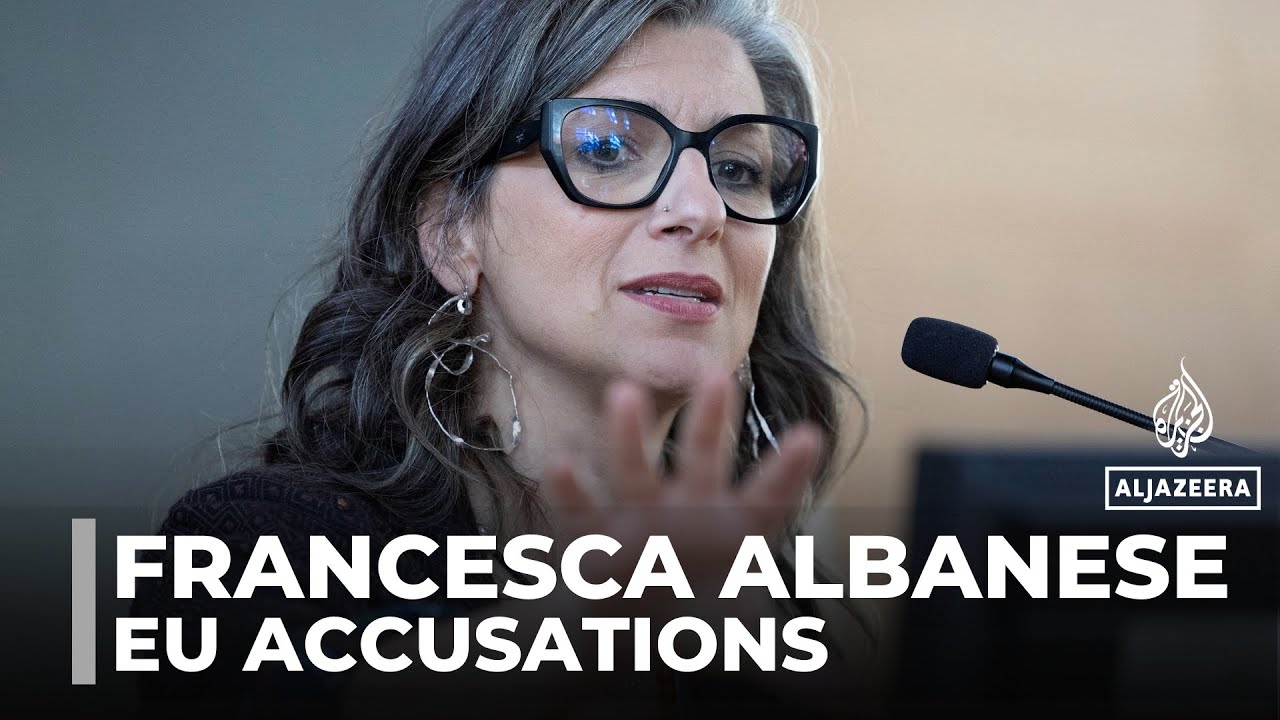
The edited clip of that speech ricocheted across social media, falsely suggesting she had called Israel ‘the common enemy of humanity’. It was promoted by the propaganda outfit “UN Watch” and its executive director, Hillel Neuer, who told baldfaced lies. She responded with weary clarity: the ‘common enemy’, she said, was the system — financial capital, algorithms and weapons — that enables atrocities, not a people or a state.
The United Nations moved swiftly to defend the independence of its mandate.
Special rapporteurs, a spokesperson reminded reporters, are not political appointees but independent experts commissioned by the Human Rights Council and protected by UN privileges and immunities.
Reuters noted there is no precedent for removing a rapporteur mid-term, and diplomats privately concede such an attempt would likely fail. Yet the calls for her resignation were not merely procedural skirmishes.
They were signals — about who is permitted to speak, and how far the language of international law may stretch before it snaps under political strain.
What makes Albanese’s work so unsettling to some capitals is not only the gravity of her conclusions, but the breadth of her analysis. In her 2025 Human Rights Council report, she traced what she termed a shift ‘from economy of occupation to economy of genocide’, mapping the corporate and financial networks that sustain settlement expansion and military operations.
She placed Western governments within that ecosystem, arguing that political cover and arms transfers had ‘stabbed international law in the heart’.
Amnesty International echoed this concern, warning that silencing her would distract from ‘Israel’s genocide in Gaza, its system of apartheid and unlawful occupation’.
Whether one agrees with her characterisation or not, the data underpinning the crisis are sobering. By late 2025, Gaza’s health authorities and UN agencies reported tens of thousands of Palestinians killed since October 2023, with vast swathes of housing, hospitals and water infrastructure destroyed. The World Bank estimated economic contraction in Gaza exceeding 80 per cent. UNICEF described levels of child malnutrition unseen in decades. These figures are not rhetorical flourishes; they are the raw arithmetic of devastation.
They form the backdrop to South Africa’s genocide case before the International Court of Justice and to repeated UN General Assembly resolutions demanding a ceasefire and humanitarian access.
Across global capitals, the language of a “rules-based order” is spoken with conviction. Yet those words hollow out when rules are applied selectively. If international law binds adversaries but spares allies, it ceases to be law and becomes leverage.
The strength of the global system rests on independent scrutiny. When UN experts can be undermined through doctored clips, coordinated outrage and political pressure, the foundations of accountability begin to shake. Today it is Gaza. Tomorrow it could be Ukraine, Myanmar, Sudan, or any conflict where truth unsettles power. Disinformation does not respect borders. Precedents travel fast. If the world tolerates the silencing of inconvenient investigators, it signals that multilateralism is conditional — firm in rhetoric, fragile in practice.
Trust erodes. Cynicism grows. The Global South watches and remembers.
Defending independent mandates is not an attack on any state. It is a defence of the very order governments claim to uphold. If the guardians of international law bend it when tested, the damage will not stay confined to one region. It will echo wherever justice depends on courage rather than convenience.
There is, of course, genuine sensitivity in Europe, shaped by the Holocaust and by the resurgence of antisemitism. Albanese herself has apologised for past remarks that were widely criticised. These complexities demand care.
Yet conflating sharp legal criticism of a state’s conduct with hatred of a people risks trivialising real antisemitism and impoverishing serious debate. The joint statement of 116 human rights organisations condemning what they described as a ‘targeted smear campaign’ warned that such tactics threaten freedom of expression and the integrity of UN mechanisms.
The UN human rights office has observed an alarming rise in personal attacks and misinformation directed at independent experts.
International relations theory offers several lenses through which to view this moment. Realists see states defending allies and interests. Liberals see institutions under strain. Constructivists note how narratives of historical trauma and identity shape policy reflexes. Yet beyond theory lies a simpler question: can the international system tolerate uncomfortable truths when they implicate powerful actors?
Albanese’s language is undeniably stark. She speaks of apartheid, of settler colonialism, of genocide. For some diplomats, such words close doors. For others, they are the only vocabulary adequate to the scale of suffering. History suggests that terms once dismissed as inflammatory — apartheid in South Africa, ethnic cleansing in the Balkans — can become anchors for accountability.
The 1963 UN Special Committee against Apartheid was once derided as politicised; it later formed part of the scaffolding that supported global sanctions and eventual transition.
The future of Gaza and Palestine will not be secured by rhetoric alone. Reconstruction will require tens of billions of dollars, credible governance reform within Palestinian institutions, security guarantees for Israel, and a political horizon that restores dignity and agency to Palestinians. A common argument is that the absence of a viable political process will simply harden cycles of violence. Sustainable development in the region hinges on accountability and inclusion; impunity breeds instability.

Francesca Albanese speaks at Doha Forum, Feb. 2026. Screenshot. Public Domain.There is space here for Australian diplomacy — measured, principled, pragmatic. Supporting humanitarian ceasefire efforts, backing the independence of international courts, conditioning arms exports on compliance with international humanitarian law, and investing in Palestinian civil society are not radical steps. They are consistent with long-stated commitments. A middle power need not shout to be heard; it must simply be consistent.
Francesca Albanese’s tenure has illuminated an uncomfortable paradox. The United Nations is often criticised as toothless, yet when one of its independent experts speaks with legal bluntness, the reaction suggests that words still matter. Attempts to sideline her have so far failed, not because she is beyond reproach, but because the mandate she holds embodies a principle larger than any individual: that human rights scrutiny must not bend to political convenience.
For a global audience weary of endless conflict, the path to a better future for Gaza and Palestine lies not in silencing dissenting voices but in confronting evidence with honesty. The credibility of the international system — and of those states that claim to steward it — depends on that courage.
In the end, the debate is less about one rapporteur than about whether the promise of ‘never again’ retains meaning when tested by the tragedies of the present.
The views expressed in this article belong to the author and do not necessarily reflect the editorial policy of Middle East Monitor or Informed Comment.
 Unless otherwise stated in the article above, this work by Middle East Monitor is licensed under a Creative Commons Attribution-NonCommercial-ShareAlike 4.0 International License. A sentence was added about the role of Un Watch.
The Disappearance of Palestine
Feb. 16th, 2026 05:04 amjuancole_feed( Foreign Policy in Focus ) – By some measures, the Palestinian bid for statehood has never been stronger.
By the end of last year, at least 157 countries had recognized the state of Palestine, which represents slightly more than 80 percent of the world’s nations. Some of those countries are quite powerful, such as China, India, Indonesia, the UK, France, Australia, and Russia. Palestine is a member of the International Criminal Court, UNESCO, the Group of 77. A Palestinian delegation has competed in every summer Olympics since 1996.
The Palestinian Authority, which functions as the closest thing to an internationally recognized government, has even prepared a draft constitution that would, if it passes a referendum, formally transform Palestinian lands into a state.
And yet, the territory that could be included in such a state is disappearing like sand in an hourglass. What’s happening today in both Gaza and the West Bank is a deliberate effort by the Israeli government to change the facts on the ground and make any “two-state solution” a territorial impossibility.
Palestine is disappearing in another sense as well. What was once a unifying goal for countries in the Middle East—siding with the powerless in an effort to create a state—has been replaced by an overriding desire to make deals with powerful countries, the United States chief among them. In the scrum of Donald Trump’s mano a mano diplomacy, Palestinians simply don’t have the leverage to gain a meaningful position.
As Canadian Prime Minister Mark Carney memorably stated in Davos last month, if you’re not at the table in these carnivorous times, then you’re on the menu.
Gaza Divided
Gaza has been reduced to 61 million tons of rubble. According to the UN Development Program, it will take seven years just to clear away the debris. It’s hard to create a homeland when 92 percent of homes have been damaged.
It’s not just buildings. Much of the area’s infrastructure lies in ruins. Water, sewage, electricity, roads: these bare necessities weren’t in great shape before the recent war. Now Gaza has become a hellscape.
Still, structures can be rebuilt. Palestinians could return and, if given a significant helping hand, even flourish.
At the moment, however, the Israel military occupies over half of Gaza. It has continued to kill Palestinians—over 500 since October 10—that it accuses of violating the ceasefire. And the Yellow Line, meant to be a temporary feature of the ceasefire dividing the Israel army from Hamas, is becoming more like a semi-permanent border.
Israeli withdrawal from Gaza, according to the three-stage peace plan, is predicated on the disarmament of Hamas. But the Palestinian militants have shown no willingness to give up what may well be their only form of leverage—the arms they retain that can strike at Israeli cities.
As a result, the development plans for the reconstruction of Gaza—either as a zone for Palestinians or a luxury resort for vacationing oligarchs—are on hold. A transitional authority of 15 technocrats has been formed, with a former Palestinian Authority minister in the top post, but it hasn’t entered Gaza or started functioning (though it did announce the recent opening of the Rafah crossing to Egypt). There is no international stabilization force on the ground to enforce the terms of the ceasefire.
Meanwhile, the Israeli far right has attempted to cross into Gaza to realize a long-held dream: the resettlement of the region.
It was two decades ago that the Israel government, bowing to the demographic reality that Israeli Arabs would eventually outnumber Israeli Jews, withdrew from Gaza and prepared the ground for Palestinian self-government. Israelis faced shocking pictures of their government physically removing Jewish settlers from their Gaza houses. The far right has long desired to reverse that decision.
The far-right activists who last week climbed a fence to enter Gaza and plant trees, before being returned across the border by Israeli soldiers, are not isolated kooks. Reports Haaretz:
Ministers and lawmakers from Prime Minister Benjamin Netanyahu’s Likud party said they would take part in a tree-planting event organized by the Nachala settlement movement, in which posters shared on social media call for “no surrender to Trump’s dictates, no to an international Gaza, yes to a Jewish Gaza!”
The Israeli far right is still only dreaming about Gaza. It is making its dream a reality in the West Bank.
West Bank Divided
The West Bank contains some of the most iconic Palestinian areas, including the cities of Hebron, Ramallah, Jenin, and Bethlehem. There is also east Jerusalem, which many Palestinians consider the capital of a future Palestine even though Israel has occupied the area since 1967.
The Oslo Accords in the 1990s divided the West Bank as a temporary measure into three zones: A, B, and C. The first is under Palestinian control, the third under Israeli control, and Zone B is jointly administered, though all three were eventually supposed to fall under Palestinian governance. In addition to all the territory it controls in the West Bank, the Israeli government has also supported the illegal Israeli occupation of Palestinian land where 700,000 Israelis live in 250 settlements.
Israeli authorities have long demolished Palestinian homes in the Israeli-controlled Zone C. But now the government has authorized the destruction of Palestinian homes in A and B as well. Over the course of its war in Gaza, Israeli forces also killed over 1,000 Palestinians in the West Bank, detained over 20,000 people, and displaced more than 30,000 people.
The Israeli authorities have long fragmented the West Bank with walls and checkpoints. But the government has recently gone even further—thanks, in part, to Donald Trump.
Since the 1990s, Israel has planned a housing development east of Jerusalem called E1. The plan, which was held up for years by U.S. pressure, cleared the Israeli courts over the summer once Trump removed U.S. objections. The development is now up for construction bids. The plan calls for 3,401 housing units and a road that will effectively cut the West Bank in half.
Lest you think that any description of E1 as an instrument of apartheid is an overstatement, consider this statement by Israeli finance minister Bezalel Smotrich. “Those in the world trying to recognize a Palestinian state will get an answer from us on the ground,” he has said. “Not through documents, not through decisions or declarations, but through facts. Facts of homes, neighborhoods, roads and Jewish families building their lives.”
E1, he continued, would “bury the idea of a Palestinian state.”
A People Without Land
Israel, like the United States, is a settler state. The Palestinians, like Native Americans, face a future of limited sovereignty, fragmented land holdings, and “land acknowledgements” on behalf of people who have disappeared from the land.
Unlike some stateless people—the Roma, the Kurds, the Rohingya—international opinion overwhelmingly favors statehood for the Palestinians. But even that support has withered where it matters most—the Middle East.
The Abraham Accords that the Trump administration pushed in its first term was designed to solidify diplomatic recognition of Israel at the expense of Palestinians. Even Saudi Arabia was on the verge of recognizing Israel while removing its longstanding demand for Palestinian statehood. The attack by Hamas on October 7, 2023 disrupted that process (and was likely a major reason for the timing of the action).
Today, Saudi Arabia is no closer to recognizing Israel. Israel’s attack on Hamas leadership in Qatar last year revived Gulf opposition to Israel and support for Palestinian statehood, all the while undermining its faith in U.S. assurances. However, Saudi Arabia and the other Arab countries that have joined Trump’s Board of Peace are falling back on another position that effectively prioritizes economic over political benefits for Palestinians. Gulf money will flow to rebuild Gaza, but the status quo will likely remain unchanged: no Saudi recognition of Israel and no Israeli recognition of a Palestinian state.
The problem for the Palestinians is that the regional order has been disrupted, and not in their favor. Iran, once a major supporter of both Hamas and Hezbollah, has lost its regional allies and is struggling to suppress dissent at home and fend off U.S. threats from abroad. It has little muscle left over to push for Palestinian statehood. Its ally in Lebanon, Hezbollah, pummeled by Israel, agreed to a ceasefire last November. According to the Lebanese government, however, Israel has continued its attacks, violating the ceasefire 2,000 times in the final three months of 2025. Israel continues to occupy five villages in southern Lebanon. Hezbollah poses no threat to Israel.
Syria had an off-and-on-again relationship with Hamas under Bashar al-Assad. The new Syrian government supports Palestine, but it is also preoccupied with holding the country together and working out a new security understanding with Israel. Egypt and Jordan, home to large Palestinian communities, have consistently supported Palestinian ambitions, if only to encourage Palestinians to return to their lands. But they alone cannot persuade either Israel or Hamas to change their positions.

“This space radar image shows the area surrounding the Dead Sea along the West Bank between Israel and Jordan.” Via NASA / JPL. Public Domain.
The Israeli government of Benjamin Netanyahu, like the Russian government of Vladimir Putin, has refused to back away from its maximalist position: destruction of Hamas, creeping annexation of the West Bank, and prevention of any Palestinian state. Elections in 2026 might bring new leadership to Israel but a fragile opposition coalition shares Netanyahu’s rejection of Palestinian statehood. So does about 70 percent of the Israeli public.
Palestinians face a very narrow path to statehood. They can hope to achieve some compromise on Hamas demilitarization—with the group giving up their rockets but retaining small arms and some disguised role in the administration of Gaza—alongside pressure from the international community to stop Israel from fully taking over the West Bank. With time perhaps, Palestinians can recuperate and rebuild.
Here, they can take some inspiration from Native Americans who have successfully regained control of some of the lands taken from them. “There was a time when it was questionable whether our people were even going to survive,” Native American Rick Williams told me recently. “In 1900, there were only 250,000 American Indians left in North America, and we were expected to become extinct by 1913. But we’ve continued to survive. We’ve continued to grow.” Today, there’s somewhere between 3.1 million and 8.7 million Native Americans, a more than tenfold increase.
Palestinians have shown similar resilience in the face of unimaginable adversity. They, too, may one day soon have a successful landback movement. But in the push for an independent state, it must be Palestinians—not Donald Trump, not Saudi Arabia, and certainly not Israel—who are the architects of their own future.
Last night was like a House teaser...
Feb. 16th, 2026 10:36 amchicating
New Cover Song: “These Days”
Feb. 16th, 2026 12:10 amscalziwhatever_feed
I moved my home music studio up from the basement to Athena’s old bedroom in the last couple of weeks, so now it’s time to put it to use, and for my first bit of music in the new space, I decided to record an old tune: “These Days” by Jackson Browne, first released in 1973.
Having said that, this arrangement is rather more like the 1990 cover version by 10,000 Maniacs, which was the first version of the song I ever heard. I originally tried singing it in the key that Natalie Merchant sang it in, and — surprise! — I was having a rough time of it. Then I dropped it from G to C and suddenly it was in my range.
I’m not pretending my singing voice is a patch on either Ms. Merchant or Mr. Browne, but then, that’s not why I make these covers. Enjoy.
— JS
(no subject)
Feb. 15th, 2026 06:22 pmgreenstormThough goodness knows the forecasts have been very off all winter, so we shall see. Either way I get my shot on Wednesday so I need to remember to plug in the truck. A dead battery will not improve that day.
I've been wading through disability paperwork and taxes. I think I've correctly hit one deadline, though it's a bit ambiguous. Now I'm working on the next, which is mid-March. The paperwork is going to eat my next doctor's appointment or two; I need to remember 1) to make more appointments if they have them (our town lost some doctors so they're booking pretty far out) and 2) to make a note to make an extra two doctor's appointments at this time every year, since it seems like this will be a yearly requirement.
I saw some stats on how many doctors' hours are used on filling out disability forms and have forgotten them. Good thing we don't have a shortage of doctors or anything. I'd hate to have a real issue like having the doctor read and summarize the last years' worth of treatments on a form when the treatment documents are gonna be sent in anyhow to the same person, who can then compare the medical docs, the doctor's description of them, and my description of them to try and find discrepancies... I'd hate to have that displaced by something like my sinus infection or someone's kid's asthma. Not that we test for asthma here, the waits are too long; if an inhaler helps it's assumed and that's where it ends.
Ok.
So you can see why I've been splitting wood and doing pottery. All the above, both doing this paperwork and feeling bitter about it, use up energy. Splitting wood and doing pottery use up energy too but they help my mind quiet down now that I'm out of books I can easily read for free. Between the stormclouds of whatever is going on with my hormonal experiments and the paperwork which reminds me that my support is entirely unsecure, it's not a good time. I've been triaging and doing this extra stuff, but my baseline is sliding back some. I'm weaker. I shake and fall unexpectedly occasionally. Bladder control is reducing again. To the best of my understanding this can be permanent, so I should stop, but.
Gotta live somehow, right?
Anyhow, I made two teapots thinking of my aunt. Teapots are complex, there are 2-3 pieces thrown on the wheel to assemble, one part pulled, lots of careful angling and cutting. I made these in dundee clay, which is horrific to work with. It took all my concentration and let me go inside the process. It's a break, a space without noise.
(I'd like to make a tree menorah but I don't yet have the skill)
I put green body stain in a bucket of white reclaim and marbled some of it into M370 and made a couple test mugs. I have very little idea how much body stain I was supposed to use so I need to fire these before going further.
I started making seed jars, thrown as one piece closed forms. These are exacting, and require precision and thought. Everything needs to fit, and it's harder to fix things afterwards.
Then today, after the seed jars from the last week, I went into the studio in town. I'm making an effort to be there on Sundays because then other people come and it can be social, and it's probably best if I exchange human voices with someone who isn't my doctor or disability police. No one else came and I marbled some tucker's red, coffee, and M370 together and made some craggy sliced bowls -- 7 of them -- and two cups, one of which is the slurpee-cup-sized cup I started all of this out with in the beginning, when I wanted to gain the skill to make something that big.
I have the skill now, though I never made a handleless cup for this purpose since I got distracted and didn't come back to it.
Making something without any shape requirements except "kinda cup-like" with no pieces that need to fit together was so straightforward and comfortable. I think the bowls will be pretty, too.
It's just not advisable for me to keep doing this until the other stuff is done. If my baseline slips too far I won't be able to do it at all, and then I'll still feel bad but without the option to overstep. And I need to rest up for spring. I need to start my tomatoes soon and that decision matrix is pretty demanding.
Spring is coming, though. It was glimmering light before 7 this morning. It'll be nice to go lie down on the ground next to a dog eventually.
I'm stealing the keyboard from my laptop for this. Again I shouldn't; it takes several days to accumulate about an hour's charge, and it doesn't run off the cord at all, so I should save it for disability and medical paperwork only. But here we are: rebellion by making pottery and writing. Story of my life.
I got home from the pottery studio and couldn't get warm or stop shaking. It's better now but I'd better go to bed for real - I do consider a difference between lying in bed in daytime and lying in bed for sleep, though I couldn't explain it.
Second injection soon, and on the wait list to get the ovaries and tubes out. That should take me 9-12 months (?) on the wait list, so we can test the chemical menopause thoroughly and pop me off the list if it's going to go bad. Hopefully I'll be telling you all about the garden soon. How nice would it be to hear a list of the peppers I'm planting instead of this nonsense?
3 Good Things
Feb. 15th, 2026 08:51 pmjjhunter2. Hosted a neat new-to-me game yesterday with some close friends and a potential new friend I met through my Awesome Neighbor friend. We all had a great time! We immediately rolled right into plotting More Fun Like This Soon. It's good to be exercising my making-new-friends muscles again.
2a. The game being Molly House, with its gripping shifts between personal queer joy, community delight, and pressuring fears (constables, rogues, and gossip all threatening to trigger police raids of the central molly houses),( I would be fascinated to play it again... )
3. I am looking forward to some quiet time at home tomorrow, I say, also having ambitions of Bake & Roast All The Things, do my taxes so I can get my solar panel credits reimbursed (yay, solar!), and maybe get some extra time in at the local studio before my pottery class starts.
Bonus: This being the cold hard dark slog time of year, it helps to have something joyous to move to. I went and looked up what all the musicians I last bought music from (mostly 5+ years ago) have put out in the last few years since, and bought the latest album of each. So far I'm particularly enjoying Wu Fei & Abigail Washburn's debut collaboration merging American old-time music and Chinese folksong, and the latest from MEUTE.
Have you been listening to anything particularly good lately? What is bringing you joy, defiant or otherwise?
The Demolished Man by Alfred Bester
Feb. 15th, 2026 07:12 amjames_davis_nicoll
Ben Reich plans a perfect murder in a world where getting away with murder is impossible.
The Demolished Man by Alfred Bester

Israel Still Throttling Medical Supplies to Gaza: “The Fungus is Eating Her Face”
Feb. 15th, 2026 05:15 amjuancole_feedAnn Arbor (Informed Comment) – The Israeli authorities are still not permitting journalists into Gaza, even months after a supposed ceasefire. The big Western news corporations are taking this prohibition as an excuse not to report on Gaza, since they don’t trust brown Arab stringers inside the Strip. In contrast, Al Jazeera English reports daily on the situation, and it can be watched on YouTube, or its own smartphone or Firestick app. The UN also issues reports based on communications from their staff on the ground.
The UN Office for the Coordination of Humanitarian Affairs reports that “UNICEF noted that children continue to be affected by airstrikes and the disruption of essential services, with 37 children reported killed since the beginning of the year . . . between 28 January and 11 February 2026, 109 Palestinians were killed, 252 were injured, and 10 bodies were recovered from under the rubble . . .”
The Israelis are still bombing the bejesus out of Gaza on a daily basis. People in the Middle East joke darkly that their definition of a cease fire is, you cease, we fire.
The health care situation is dire.
Here is an interview with a British physician who has gone to Gaza as a volunteer 40 times and is in close contact with current volunteers there. He reports that because of a lack of medicine, gruesome situations are unfolding, such as fungus eating people’s faces.
[This post contains video, click to play]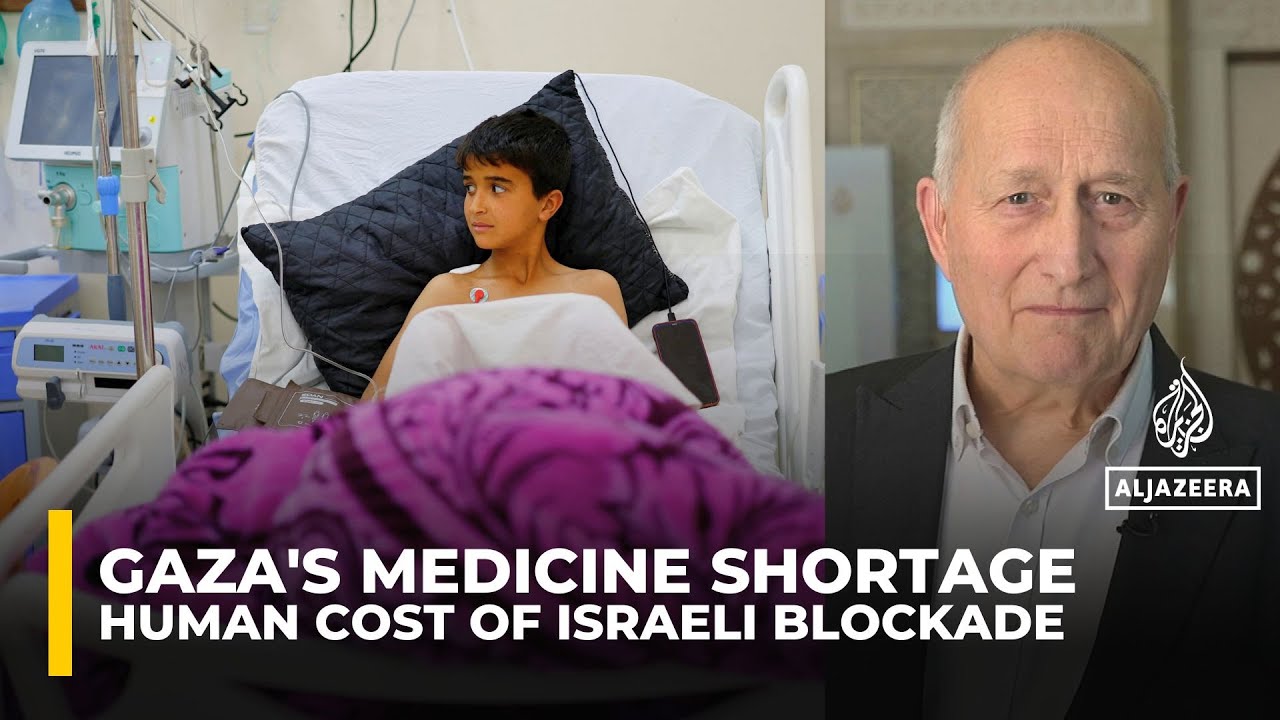
Here is the computer-generated transcript of the interview, which I had ChatGPT clean up for readability:
- Al-Jazeera
Dr. Graeme Groom is an orthopedic surgeon. He has volunteered in hospitals across Gaza over forty times . . . Can you talk to us about your experiences when you were in Gaza?
Dr. Groom:
Most recently in May, I was based at the Nasser hospital with my colleagues, and during our visit, the hospital pharmacy was bombed. We are very very familiar with the shortages, and as the pharmacy store was bombed, they became more acute. The problem with shortages of medicine is it sounds almost benign, but we have colleagues who are in Gaza every month. And last night a colleague sent an urgent request for an antifungal drug called amphoterasin.
Now she wanted this for an 18-year-old girl who had a very rare fungal infection, a mucosis, as a consequence of diabetes, multiple comorbidities, poorly treated because of the shortages. And her very last message was this is an emergency, the fungus is eating her face. So that is when we talk about shortages of medicines and we talk about lists that are at zero stock, both medicine and surgical equipment, it doesn’t sound quite as dramatic, but the individual impact is absolutely huge.
Al-Jazeera:
Now Israel is supposed to be allowing in aid and medicines because of the ceasefire. Are you able to compare to us the situation as you understand it now in Gaza compared to what it was like before the start of the ceasefire?
Dr. Groom:
… I can’t speak for this supply of medicines because we’re more concerned with the supply of surgical equipment. What has happened before the ceasefire and has continued since it is there has been a tighter and tighter squeeze so that when we travel from Amman through Allenby Bridge and Kerem Shalom, we were earlier before the ceasefire allowed to take a certain amount of equipment with us. We are now allowed to take nothing. And when I say nothing, I mean an anotist had his stethoscope confiscated on the basis that he wasn’t going to listen to his own heart, was he?
There is, as with everything in Gaza, there’s a tightening and relaxing of the rules. So that that was at its tightest. We’re now told that with sufficient advanced warning, we can take two small boxes of equipment in at each visit. That is very unclear. The definition of what that means is unclear. And of course, there’s this immense problem of dual use items. Anything that is defined as dual use is prohibited.
And you may know or you may not know that tents are defined as dual use because they have poles.
Al-Jazeera
Just very briefly sir, it was reported that around 20,000 people were in need of urgent medical care in Gaza. The Rafa crossing has now of course opened with the purpose of allowing people out to get that treatment. What is your assessment of how effective that is going to be? Just briefly sir if you don’t mind.
Dr. Groom:
Yeah at the moment the number who are evacuated is a trickle. There is a much larger number of between 20 to 25,000 who need long-term treatment and that is our specialty. What is required is first those who cannot be treated within Gaza are allowed out, but more importantly that we are allowed in with our equipment.”
The partial reopening of the Rafah crossing in the far south of the Gaza Strip, bordering on Egypt, has resulted in a tiny number of medical evacuees being allowed to leave. The UN Office for the Coordination of Humanitarian Affairs reports, “Between 2 and 10 February, the UN and partners supported the medical evacuation of 142 patients, alongside companions, including 91 patients (64 per cent) via Rafah Crossing and 51 patients (36 per cent) via Kerem Shalom Crossing. During the same period, UN teams in Gaza received 223 Palestinian returnees.”
OCHA continues, “At the current pace, Save the Children estimates that evacuating those in need could take over a year. Thousands of patients remain without access to specialized treatment unavailable in Gaza, and more than 18,500 people, including 4,000 children, remain in urgent need of medical evacuation.”
The UN points out that staff shortages and damage to infrastructure continue to leave the Gaza health system in ruins.

File photo of makeshift shelter in Gaza by Hosny salah: https://www.pexels.com/photo/young-boy-sitting-in-makeshift-shelter-in-gaza-36038665/
The Israeli authorities deliberately destroyed all the universities and medical schools in the Gaza Strip, even though these were not military targets. It also destroyed or degraded most medical facilities. The medical students who had been about to get their MDs haven’t been graduated because their universities lie in rubble. The UNDP and the remnants of the local universities (the people are still there even if the buildings are not) are supporting 470 nearly-finished medical students to complete their training and get certified.
The conditions in the strip remain unsanitary. People are living in tents with no sewage. 77% of water samples come back contaminated, including with fecal matter. Hepatitis A outbreaks are widespread, with nearly 6,000 cases reported in 2025, and the situation actually worsened after the so-called ceasefire. OCHA says, “In addition, over 496,000 cases of acute watery diarrhoea were reported, of which about 47 per cent were among children under five.” The rate doubled in 2025 over 2024. Diarrhea doesn’t sound dangerous, but it is a killer of infants. Those nearly 250,000 children under 5 who contracted it almost certainly experienced a big spike in deaths.
It should be remembered that this humanitarian disaster is not “war.” There is no war. It is Israeli policy to impose unlivable conditions on the people of Gaza, in hopes of thinning their ranks. It is deliberate genocide.
How 3 local BDS campaigns won the divestment of millions in Israeli bonds
Feb. 15th, 2026 05:06 amjuancole_feedOn Nov. 19, 2025, members of Break the Bonds NC, a coalition of Palestine Solidarity organizations, spoke at a North Carolina Investment Authority board meeting to demand the state pension fund divest from all Israeli government bonds. Immediately after the meeting, the state treasurer’s office emailed a link of the pension’s holdings to Ari Rosenberg, a lead Break the Bonds NC organizer. The $6.7 million in Israeli bonds that had been there in June were no longer in the portfolio.
Rosenberg was in disbelief that only five months since the campaign’s launch, the state had already completely divested. But after receiving another email from the treasury confirming that the state pension fund no longer held any Israeli bonds, her disbelief gave way to elation. “I cried really hard,” Rosenberg said. “And then I recorded a message to my comrades being like, ‘You won’t believe this.’”
She wasn’t alone. A few weeks prior, organizers in Minnesota and Michigan received the same good news: that state investment bodies had divested from or declined to reinvest in Israeli bonds. In total, the three states dropped approximately $27 million in bonds.
But Israeli bonds remain a contentious issue in many parts of the country, including New York City, where organizers are pressuring comptroller Mark Levine not to reinvest after former comptroller Brad Lander divested in 2023. Mayor Zohran Mamdani opposes reinvestment, setting the stage for a potential showdown.
While the North Carolina campaign targeted sovereign debt bonds, which are issued directly by the Israeli government, organizers in New York, Michigan and Minnesota targeted another financial instrument, known as “Israel Bonds.”
This investment vehicle originated in the aftermath of the 1948 Nakba, Arabic for “catastrophe,” when Israel was founded on the rubble of ethnically cleansed Palestinian villages. During a time of economic insecurity, Israel’s first prime minister, David Ben-Gurion, conceived of a financial instrument designed specifically for American Jews to materially support Zionism.
Militarized occupation and genocide are expensive: The Israeli Defense Forces have spent $60 billion on military operations since Oct. 7, 2023. To foot the bill, the Development Corporation for Israel, or DCI, a de facto wing of the state that brokers Israel Bond sales, sold more than $1 billion in bonds during the 30 days following Oct. 7. Sales totaled a record $5.7 billion by October 2025, and just last month, Palm Beach County purchased another $350 million in DCI Bonds, boosting its Israel Bonds portfolio to $1 billion. Additionally, between October 2023 and January 2025, the Israeli Ministry of Finance raised $19.4 billion for its war chest through sovereign debt bonds — the financial instrument that the North Carolina State Treasurer divested from.
Israel Bonds “offer a slush fund that insulates the Israeli military and government from the logical, legal and righteous nonviolent economic pressure that institutions can act on to abide by international law,” said Dani Noble, national campaigns manager of Jewish Voice for Peace, or JVP.
The DCI website describes Israel Bonds as “an invaluable and strategic national resource, especially since bonds clients have proven time and again that when Israel is in the midst of a crisis, they do not walk away.” However, at least in some parts of the U.S., that seems to be changing.
Israeli bonds — both DCI and sovereign debt — have become a primary target for organizers seeking an end to local complicity in the Gaza genocide. According to Noble, there are at least 14 different divestment campaigns focused on Israeli bonds around the country, 13 of which started after Oct. 7, 2023. Public opinion is with them: An October 2025 IMEU Policy Project poll found that 76 percent of Democrats support a ban on purchasing Israel bonds.
While they differed in their organizing arena and the type of bonds targeted, the Michigan, Minnesota and North Carolina divestment campaigns shared some common features.
Finding the money
Before these campaigns launched publicly, divestment organizers developed research strategies that included public records requests and conversations with government officials. This research helped them hone in on specific targets.
Break the Bonds North Carolina — a coalition consisting of Muslims for Social Justice, Palestinian Youth Movement-North Carolina, Durham Educators for Abolition and Liberation, and two local chapters of JVP — formed in February 2024 on the heels of a series of municipal ceasefire resolution wins. Organizers initially conceived of municipal-level campaigns in order to maximize pressure on elected officials. But when they researched state investment laws, they learned that municipalities do not manage their own investments; instead, the State Treasurer manages them. Despite their eagerness to focus locally, Rosenberg said this research revealed they “had to do a statewide campaign, and so we switched to the state pension plan.”
In Michigan, Matt Clark, a labor lawyer and longtime organizer in the Palestine solidarity movement, led the charge on researching Israeli bond holdings, starting in July 2024. He built rapport with a Michigan Treasury Department public relations liaison by presenting himself as a citizen curious about the state pension fund’s international bond holdings. “I didn’t say anything about why I wanted it; I didn’t say anything about Israel Bonds,” Clark said. “I just asked for any information on international bonds.” The treasury department offered to send the entire 90-page pension fund portfolio. Upon digging through it, Clark found Israel Bonds.
The portfolio revealed that the pensions of 550,000 former and current state employees were invested in a $10 million DCI Bond, purchased November 2023 and expiring November 2025. Subsequent FOIA requests showed that the Michigan treasury had invested in Israel Bonds for 30 years.
After receiving this information, Clark began talking with people across Michigan about a potential divestment campaign. He found it difficult to explain the abstruse nature of the Michigan retirement system and of Israel Bonds. “It’s hard to get people’s attention, especially when you’re trying to get your own head around it, but I knew that if I got into this it would become my life,” Clark said.
Eventually he connected with a group called Lansing for Palestine, based in Clark’s hometown. “I showed up to their meeting and didn’t know a single person,” Clark said. “I pitched them on an Israel Bonds campaign and was pleasantly surprised at how enthusiastic they were. And things really went from there. I was lucky enough to find people who were willing to also make this their life for a while.”

Michigan Divest launched in October 2024 with a clear one-year timeline and a simple demand for the Michigan treasury: not to reinvest in Israel Bonds when they expired in November 2025. “It was pretty ambitious; you have to be kind of half out of your mind to think that you can even do this,” Clark said.
While these state-level campaigns were forming, a behind-the-scenes national network of Israeli bonds divestment organizers had coalesced to deepen each other’s research capabilities and share strategy tips, facilitated by JVP, the U.S. Campaign for Palestinian Rights, the American Federation of State, County and Municipal Employees, and the Internationalist Law Center.
Matt Clark credits this network with helping Michigan organizers understand the different types of Israeli bonds, which was crucial to building a statewide strategy. “The technical knowledge about Israel Bonds was really essential,” Clark said. He learned that DCI Bonds are “illiquid,” meaning they are exceedingly difficult to trade before the bond’s maturity date — in this case, November 2025. Organizers knew they had a firm deadline to pile on the political pressure.
Unlike the one-year campaign in Michigan, Minnesotans have been organizing for Israeli bonds divestment for almost two decades. Inspired by the launch of the BDS movement by Palestine civil society groups in 2005, an autonomous group of organizers in Minnesota got to work looking for a suitable target. Through public records requests, they found out that the Minnesota State Board of Investment, or SBI, which manages the state’s three largest public pension funds, held both types of Israeli bonds. A divestment campaign called Minnesota Break the Bonds launched in 2008.
Building the base
For all three campaigns, signaling sweeping support for divestment was essential. Organizations in the Minnesota-Palestine solidarity ecosystem spent decades building a base of opposition to the state’s Israel holdings, including hosting teach-ins about the SBI.
Break the Bonds NC assembled a statewide coalition in just under one year. At events ranging from political rallies to farmer’s markets, they gathered 4,600 signatures for a petition to State Treasurer Bradford Briner demanding state divestment from Israeli government bonds. They also received 41 organizational endorsements, including from UE Local 150, a public service workers union representing thousands of pension holders.
Labor played an important role in Michigan as well. Michigan Divest was endorsed by multiple local labor unions, including AFT 681 (Dearborn Federation of Teachers), AFT Local 2000 (Wayne County Community College Federation of Teachers), AFT Local 4751 (Lansing Community College Administrative Association) and UAW Local 6000 Region 1A Retirees Subchapter, which all represent state pensioners.
Clark also spoke about Israel Bonds at a Metro Detroit DSA meeting, where he collected signatures for a petition calling on the Michigan treasury to allow the DCI Bonds to mature without reinvesting. Michigan Divest flyered at multiple No Kings rallies across the state in October and collected signatures at a 2025 Pride event in Ferndale. Overwhelmingly, the campaign received positive responses from the public.
“We felt like we really tapped into something, because people are watching this horrible thing happen on their cell phones and wondering, ‘What the hell can I even do?’” Clark said. “I feel like we were able to answer that question.”
Inside-outside strategies take shape
All three campaigns pursued some combination of an inside-outside strategy. Michigan Divest emphasized “building a warm working relationship with key decision makers,” said campaign organizer Anna Martinez-Hume. The organizers’ warmth paid off, she said, and “they wanted to meet with us again and again. We had a laundry list of key questions, and worked with our coalition in strategizing meetings about what information we wanted to know.” Through these meetings, Michigan Divest learned that the chief investment officer, Jon Braeutigam, is solely responsible for managing assets that represent 1 percent or less of the state pension portfolio and that Israel Bonds fell within those parameters.
That information helped them understand which official they had to convince and guided their outside strategy toward public investment board meetings. “When we showed up to the first investment board meeting, there was not an empty seat in the room,” Clark said. In subsequent meetings, support for Israel Bonds divestment was so widespread that the board had to book a bigger room.
In Minnesota, organizers began by pursuing a lawsuit against the state, on the grounds that the investments funded war crimes and made Minnesota complicit in Israel’s violations of international law. When the lawsuit was thrown out based on lack of standing in November 2012, the group shifted its strategy to a full-blown public pressure campaign targeting the four elected officials helming the SBI: the governor, attorney general, secretary of state and state auditor. MN BDS Community, a statewide clearinghouse for BDS information, formed in 2015 and adopted Minnesota Break the Bonds as its first campaign.
“We had state employees and pensioners testifying before the State Board of Investment for years,” said Bob Goonin, a MN BDS Community organizer. Speakers from American Muslims for Palestine, JVP, the MN Anti-War Committee and other groups made the same case the lawsuit had — that the investments made the SBI complicit in international law violations, genocide and apartheid.
“Especially since we’ve seen starvation used as a weapon of war, teachers have been calling out to the state board saying they don’t want to see children starving in Gaza when they are teaching children here,” Goonin said.
Others appealed to the SBI’s fiduciary responsibility, citing recent credit downgrades that make Israeli bonds a risky investment. “Groups across Minnesota came at this from different angles, but it was really a coordinated effort,” Goonin said. As Israel’s genocide in Gaza escalated over the past two years, more and more Minnesotans protested at SBI meetings.
The SBI reacted by moving its public meetings to a smaller space without live public comment in December 2024. During the March 2025 public meeting, dozens of state troopers guarded the building entrance and blocked parking lots. Goonin saw all of this as a sign that the pressure campaign was working.
Beyond public comment meetings, some organizers focused on meeting with legislators and SBI board members, while others organized actions outside of the governor’s mansion.
In June 2025, before Break the Bonds North Carolina publicly launched, three pension holders with the campaign met with the state treasurer to develop a relationship and express their concern about Israeli bonds. “The treasurer said he was unaware of Israeli bonds and asked for info on them,” Rosenberg said. After organizers sent him information, “he said that he didn’t find the bonds compelling from a risk reward perspective.” Immediately after that meeting, NC Break the Bonds launched its campaign publicly and in October, the treasurer fully divested.
Bonds broken
Despite the Minnesota SBI, the North Carolina treasurer’s office and Michigan treasury each claiming the divestment moves were purely financial, organizers in all three venues claim they are a clear response to public pressure. “The community’s opposition to the state board holding these Israel bonds was a primary driver in their decision,” Minnesota organizer Bob Goonin said.
In Michigan, victory came in November when the chief investment officer decided not to reinvest in the $10 million Israel Bonds after they expired. Public records requests by Michigan Divest revealed that DCI’s national managing director, Larry Berman, had repeatedly emailed the treasury, pleading with the state to reinvest and even offering rates higher than those publicly available.
“When I saw [the emails], my hair stood up, it was so creepy,” Clark said. “I felt like we saw a shark fin breaching the surface for just a minute. … We know that they’re paying attention. They realize we’re a threat.” The divestment movement in Michigan was threatening enough to break the 30-year financial relationship between Michigan and the state of Israel.
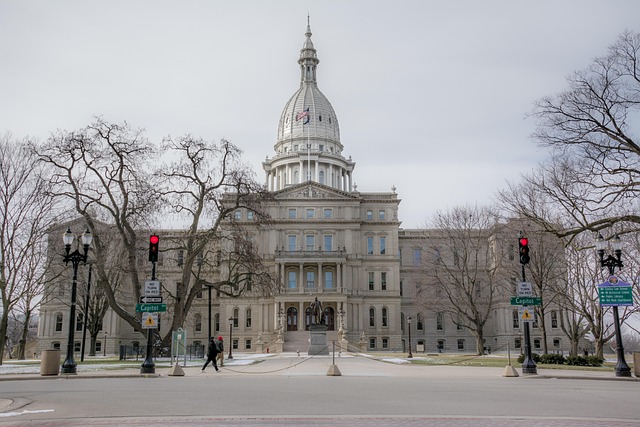
Image of Michigan Capitol, Lansing, by Jason Gillman from Pixabay
The win in North Carolina was equally significant, considering that the treasurer actively decided to sell the sovereign debt bonds. “I think it shows that these pressure campaigns work,” Rosenberg said. “Investing in Israel is just a bad investment for all the reasons. It’s a bad financial and a bad moral investment.” Rosenberg also believes that the consecutive wins across state lines suggest that state pension managers are communicating with each other.
Making that financial argument was also critical in Minnesota, where organizer Karen Schraufnagel believes the most important factor was appealing to the SBI’s fiduciary responsibility. In October, public records received by the MN BDS Community showed that the SBI had sold or let expire all but $470,000 in Israeli bonds — from a peak of $13.3 million — at a loss of $830,000.
Rosenberg acknowledged that these state divestment wins are “a blip” in comparison to the multi-billion Israeli bonds portfolio,“but every penny matters in this divestment strategy.”
“We recognize it’s really just a little bit of good news, but we needed it,” she added. “You really have to say this is a victory,” Schraufnagel concurred. “But it’s hard to feel enthusiastic when your feed is full of starving children. We have to say good work and go on to the next thing. Five minute celebration and then back to work.”
Across the United States, there are at least 11 other active Israeli bonds divestment campaigns, focusing on a range of institutions. Some campaigns are just launching publicly, such as in Maryland; others have been simmering for years, such as in New York state. “In the wake of the recent victories, we’re seeing unprecedented breakthroughs and possibilities in a variety of communities, from Miami-Dade County, Florida to Indiana, to New York City,” said Dani Noble, the JVP national organizer.
The three victorious campaigns are currently planning the next stage of their divestment strategy. The Michigan Divest coalition is scouring other institutions invested in Israel Bonds, while Minnesota and North Carolina are focused on their state pension funds’ investments in weapons manufacturers and other companies targeted by the BDS Movement for complicity in apartheid and genocide. Regardless of where it turns next, it is clear that the divestment movement is building momentum across the U.S.
Iran has more Options up its sleeve than Trump and Netanyahu Assume
Feb. 15th, 2026 05:04 amjuancole_feed( Opendemocracy.net ) – Are the US and Iran headed for all-out war? Binyamin Netanyahu is undoubtedly hoping so. With a general election looming this year, the Israeli prime minister certainly believes it is vital to convince Donald Trump that the US should force Iran to cease its nuclear programme entirely and stop developing and deploying ballistic missiles that can reach Israel.
Having confirmed he will seek re-election, achieving these aims would give Netanyahu a much greater chance of presenting himself as a victorious leader, regardless of the suffering inflicted on Palestinians in Gaza and the occupied West Bank.
To that end, Netanyahu visited Washington this week to join Trump’s Board of Peace, the newly created US mechanism to settle the war in Gaza. He was not due to travel to the US until the board’s first official full meeting next week, but his trip was unexpectedly brought forward due to the US/Iranian negotiations over the latter’s nuclear weapons programme, with the next round of talks likely to take place next week.
In the event, the Israeli PM left the White House disappointed; his meeting with Trump lasted only three hours, and the outcome was inconclusive. Netanyahu was expected to push for a more forceful intervention by the US military, but seemingly failed to get his way, with Trump later saying that talks with Iran would continue.
Tensions over Iran’s plans have been rising for more than a month, while the US has been steadily increasing the size of its military forces in the Middle East. These normally involve around 30,000 military personnel, mainly units in Jordan, Kuwait, Qatar, Bahrain, the UAE and Saudi Arabia, but also including Syria and Iraq, as well as forces permanently based in Israel.
Last month, the Pentagon announced it was moving an aircraft carrier strike group from the Philippines to the Middle East, and it has now ordered a second to move to the region, likely from the US East Coast, according to a report in the Wall Street Journal this week.
Trump this week repeated his threat to send a second carrier strike group to the region, while other reports suggest that more US F-35 strike aircraft are being moved to bases within range of Iran, with six aircraft having flown to the Middle East from the UK’s RAF Lakenheath earlier this week.
Despite this increased US readiness and Netanyahu’s hopes, getting Iran to give up on its ballistic missile programme is frankly unlikely. While there are indications that Iran’s economic problems, together with the mass protests last month, mean the theocratic leadership would like to see an easing of sanctions and avoid war, its willingness to respond only goes so far.
A revised nuclear inspection regime with the UN’s International Atomic Energy Authority may be the best the US and Israel can hope for. Not least because Trump’s claim last summer that the US attack on Iran’s underground nuclear projects had wrecked its whole nuclear programme was a gross overstatement; it likely set the programme back months, not years.

Photo of Tehran by Mohammad Amirahmadi on Unsplash
This is where Netanyahu’s problems start. Trump may point to huge forces being massed in the region, and analysts will certainly point to the immense power that the US and Israeli forces would have if they decided to launch a combined assault. Iran could be pummelled by air, drone and missile attacks stretching over weeks if not months, but Iran has at least two strengths of its own.
One is obvious: if Tehran is facing such an assault, then its ‘Samson Option’ response would be sustained paramilitary and drone attacks on oil and gas production and export plants, including the closure of the crucial Strait of Hormuz shipping channel. The global impact could be massive – on a par with the 1973/4 oil price surge that did much to usher in the global neoliberal era.
That is an extreme move, but there is a political halfway house that is less widely recognised. One of Iran’s few strengths lies in its development and production of low-cost short-range armed drones, of which it has produced thousands and sold many to Russia to be used in Ukraine to devastating effect.
The key factor here is that most such drones do not have the range to reach Israel, but could certainly cross the much shorter distance of a couple of hundred kilometres over the Gulf to the many US military facilities in Kuwait, Qatar, Bahrain and elsewhere.
Given the determination of the Iranian Revolutionary Guard Corps, it is well-nigh certain that it already has scores of stocks of appropriate munitions hidden across the country and ready to use for this purpose. It will also have established a robust capability to manufacture armed drones in time of war at numerous small factories and workshops in towns and cities throughout the country.
The US military will, of course, be ready for this and will no doubt succeed in destroying the great majority of the attacking drones, just as Ukrainian air defences are stopping many Russian attacks. But that misses the point of this being a political rather than military tactic.
If Iran is facing a bitter war of attrition, then all it has to do in return is kill just a few US soldiers. The war itself will likely cause a global economic downturn that will be damaging enough to Trump, but losing young American lives in a foreign war instigated by Trump himself would be little short of a political disaster.
What may really be at issue is whether an overconfident White House, egged on by a hubris-laden Pentagon, an insistent Netanyahu and the ever-present arms corporations, may ignore whatever wise advice there may still be found in the crevices of the Capitol and take the war option anyway. Perhaps good sense will prevail, but given Trump’s past record and his sheer unpredictable character, don’t count on it.

This article is published under a Creative Commons Attribution-NonCommercial 4.0 International licence. If you have any queries about republishing please contact us. Please check individual images for licensing details.
Valentine themed Friday Five...belated.
Feb. 14th, 2026 05:35 pmchicating2. Who is the last person you kissed?Mom and I kiss, but we don't *kiss*, right? If you are talking about the passionate kind, he is on my circle.
3. What is the story of your most romantic kiss?1. At a party, New Year's Eve, even if we didn't go out for a year of weekends after this, still my favorite because it's a movie moment I actually got to have. 2. On a hotel terrace after meeting online friends in real life. It started to rain, not like a Cusack movie poster, but enough that rain makes me think of him often.
4. What is the story of your worst kiss?Either that the year of weekends ended on Valentine's Day, or something shorter and more general: Too Much Tongue, Too Fast.
5. Who do you want to kiss right now?In some ways, I've learned a lot since I was the bookish little thing that was secretly still hot to trot, but it's been a while--I'd be pretty open right now.But I'd love to see my online posse, too.
Copy and paste to your own journal, then reply to this post with a link to your answers. If your journal is private or friends-only, you can post your full answers in the comments below.

10 Thoughts On “AI,” February 2026 Edition
Feb. 14th, 2026 10:28 pmscalziwhatever_feedBecause it feels like a good time to do it, some current thoughts on “AI” and where it, we and I are about the thing, midway through February 2026. These are thoughts in no particular order. Some of them I’ve noted before, but will note again here mostly for convenience. Here we go:
1. I don’t and won’t use “AI” in the text of any of my published work. There are several reasons for this, including the fact that “AI”-generated text is not copyrightable and I don’t want any issues of ownership clouding my work, and the simple fact that my book contracts oblige me to write everything in those books by myself, without farming it out to either ghostwriters or “AI.” But mostly, it’s because I write better than “AI” can or ever will, and I can do it with far less energy draw. I don’t need to destroy a watershed to write a novel. I can write a novel with Coke Zero and snacks. Using “AI” in my writing would create more work for me, not less, and I really have lived my life with the idea of doing the least amount of work possible.
If you’re reading a John Scalzi book, it all came out of my brain, plain and simple. Better for you! Easier for me!
2. I’m not worried about “AI” replacing me as a novelist. Sure, someone can now prompt a novel-length work out of “AI” faster than I or any other human can write a book, and yes, people are doing just that, pumping into Kindle Unlimited and other such places a vast substrate of “AI” text slop generated faster than anyone could read it. Nearly all of it will sit there, unread, until the heat death of the universe.
Now, you might say that’s because why would anyone read something that no one actually took any effort to write, and that will be maybe about 5% of the reason. The other 95% of the reason, however, will be discoverability. Are the people pumping out the wide sea of “AI” text slop planning to make the spend for anyone to find that work? What are their marketing plans other than “toss it out, see who locates it by chance”? And if there is a marketing budget, if you can generate dozens or hundreds of “AI” text slop tomes in a year, how do you choose which to highlight? And will the purveyors of such text slop acknowledge that the work they’re promoting was written by no one?
(Answer: No. No they won’t).
I am not worried about being replaced as a novelist because I already exist as a successful author, and my publishers are contractually obliged to market my novels every time they come out. This will be the case for a while, since I have a long damn contract. Readers will know when my new books are out, and they will be able to find them in bookstores, be they physical or virtual. This is a huge advantage over any “AI” text slop that might be churned out. And while I don’t want to overstate the amount of publicity/marketing traditional publishers will do for their debut or remaining mid-list authors, they will do at least some, and that visibility is an advantage that “AI” text slop won’t have. Even indie authors, who must rely on themselves instead of a publicity department to get the word out about their work, have something “AI” text slop will never have: They actually fucking care about their own work, and want other people to see it.
I do understand it’s more than mildly depressing to think that a major market difference between “AI” text slop and stuff actual people wrote is marketing, but: Welcome to capitalism! It’s not the only difference, obviously. But it is a big one. And one that is likely to persist, because:
3. People in general are burning out on “AI.” Not just in creative stuff: Microsoft recently finally admitted that no one likes its attempt to shove its “AI” Copilot into absolutely everything, whether it needs to be there or not, and is making adjustments to its businesses to reflect that. “AI” as a consumer-facing entity rarely does what it does, better than the programs and apps it is replacing (see: Google’s Gemini replacing Google Assistant), and sucks up far more energy and resources. Is your electric bill higher recently? Has the cost of a computer gone up because suddenly memory prices have doubled (or more)? You have “AI” to thank for that. It’s the solution to a problem that not only did no one actually have, but wasn’t a problem in the first place. There are other issues with “AI” larger than this — mostly that it’s a tool to capture capital at the expense of labor — but I’m going to leave those aside for now to focus on the public exhaustion and dissatisfaction with “AI” as a product category.
In this sort of environment, human-generated work has a competitive advantage, because people see it as more authentic and real (which it is, to the extent that “authentic” and “real” mean “a product of an actual human brain”), and more likely to have the ability to surprise and engage the people who encounter it. I don’t want to oversell this — humans are still as capable of creating lazy, uninspired junk as they ever were, and some people really do think of their entertainment as bulk purchases. Those vaguely sad people will be happy that “AI” gives them more, even if it’s of lesser quality. But I do think in general when people are given a choice, that they will generally prefer to give their time and money to the output of an actual human making an effort, than to the product of a belching drain on the planet’s resources whose use primarily benefits people who are already billionaires dozens of times over. Call me optimistic.
Certainly that’s the case with me:
4. I’m supporting human artists, including as they relate to my own work. I’ve noted before that I have it as a contractual point that my book covers, translations and copyediting have to be done by humans. This is again both a practical issue (re: copyrights, quality of work, etc) and a moral one, but also, look, I like that my work pays other humans, and I want that to continue. Also, in my personal life, I’m going to pay artists for stuff. When I buy art, I’m going to buy from people who created it, not generated it out of a prompt. I’m not going to knowingly post or promote anything that is not human-created. Just as I wish to be supported by others, I am going to support other artists. There is no downside to not promoting/paying for “AI” generated work, since there was no one who created it. There is an upside to promoting and paying humans. They need to eat and pay rent.
“But what if they use AI?” In the case of the people working on my own stuff, it’s understood that the final product, the stuff that goes into my book, is the result of their own efforts. As for everything else, well, I assume most artists are pretty much like me: using “AI” for their primary line of creativity is just introducing more work, not less. Also I’m going to trust other creators; if they tell me they’re not using “AI” in their finished work then I’m going to believe them in the absence of a compelling reason not to. I don’t particularly have the time or interest in being the “AI” police. Anyway, if they’re misrepresenting their work product, that eventually gets found out. Ask a plagiarist about that.
With all that said:
5. “AI” is Probably Sticking Around In Some Form. This is not an “‘AI’ Is Inevitable and Will Take Over the World” statement, since as noted above people are getting sick of it being aggressively shoved at them, and also there are indications that a) “this is the worst it will ever be” is not true of AI, as people actively note that recent versions of ChatGPT were worse to use than earlier versions, b) investors are getting to the point of wanting to see an actual return on their investments, which is the cue for the economic bubble around AI to pop. This going to be just great for the economy. “AI,” as the current economic and cultural phenomenon, is likely to be heading for a fall.
Once all that drama is done and we’ve sorted through the damage, the backend of “AI” and its various capabilities will still be around, either relabeled or as is, just demoted from being the center of the tech universe and people making such a big deal about it, scaled down and hopefully more efficient. I understand that the “AI will probably persist” position is not a popular one in the creative circles in which I exist, and that people hope it vaporizes entirely, like NFTs and blockchains. I do have to admit I wouldn’t mind being wrong about this. But as a matter of capital investment and corporate integration, NFTs, etc are a blip compared to what’s been invested in “AI” overall, and how deep its use has sunk into modern capitalism (more on that in a bit).
Another reason I think “AI” is likely to stick around in some form:
6. “AI” is a marketing term, not a technical one, and encompasses different technologies. The version that the creative class gets (rightly) worked up about is generative “AI,” the most well-known versions of which were trained on vast databases of work, much of which was and is copyrighted and not compensated for. This is, however, only one subset of a larger group of computational systems which are also called “AI,” because it’s a sexy term that even non-nerds have heard of before, and far less confusing than, say, “neural networks” or such. Not all “AI” is as ethically compromised as large-scale generative “AI,” and a lot of it existed and was being used non-controversially before generative “AI” blew up as the wide-scale rights disaster it turned out to be.
It’s possible that “AI” as a term is going to be forever tainted as a moral hazard, disliked by the public and seen as a promotions drag by marketing departments. If and when that happens, a lot of things currently hustled under the “AI” umbrella will be quietly removed from it, either returning to previous, non-controversial labels or given new labels entirely. Lots of “AI” will still be around, just no one will call it that, and outside of obvious generative “AI” that presents rights issues, fewer people will care.
On the matter of generative “AI,” here’s a thought:
7. There were and are ethical ways to have trained generative “AI” but because they weren’t done, the entire field is suspect. Generative “AI” could easily have been trained solely on material in the public domain and/or on appropriately-licensed Creative Commons material, and an opt-in licensing gateway to acquire and pay for copyrighted work used in training, built and used jointly by the companies needing training data, could have happened. This was all a solvable problem! But OpenAI, Anthropic, et al decided to train first, ask forgiveness later, on the idea that would be cheaper simply to do it first and to litigate later. I’m not entirely sure this will turn out to be true, but it is possible that at this late stage, some of the companies will go under before any settlements can be achieved, which will have the same effect.
There are companies who have chosen to train their generative models with compensation; I know of music software companies that make a point of showing how artists they worked were both paid for creating samples and other material, and get paid royalties when work generated from those samples, etc is made by people using the software. I think that’s fine! As long as everyone involved is happy with the arrangement, no harm, and no foul. But absent of that sort of clear and unambiguous declaration of provenance and compensation regarding training data, one has to assume that any generative “AI” has used stolen work. It’s so widely pervasive at this point that this has to be a foundational assumption.
And here is a complication:
8. The various processes lumped into “AI” are likely to be integrated into programs and applications that are in business and creative workflows. One, because they already were prior to “AI” being the widely-used rubric, and two, because these companies need to justify their investments somehow. Some of these systems and processes aren’t tainted by the issues of “generative AI” but many of them are, including some that weren’t previously. When I erase a blotch in an image with Photoshop, the process may or may not use Generative AI and when it does, it may or may not use Adobe’s Firefly model (which Adobe maintains, questionably, is trained only on material it has licensed).
Well, don’t use Photoshop, I hear you say. Which, okay, but I have some bad news for you: Nearly every photoediting suite at this point incorporates “AI” at some point in its workflow, so it’s six of one and half dozen of the other. And while I am a mere amateur when it comes to photos, lots of professional photographers use Adobe products in their workflow, either because they’ve been using it for years and don’t want to train on new software (which, again, probably has “AI” in its workflow), or they’re required to use it by their clients because it’s the “industry standard.” A program being the “industry standard” is one reason I use Microsoft Word, and now that program is riddled with “AI.” At a certain point, if you are using 21st century computer-based tools, you are using “AI” of some sort, whether you want to or not. Some of it you can turn off or opt out of. Some of it you can’t.
(Let’s not even talk about my Google Pixel Phone, which is now so entirely festooned with “AI” that it’s probably best to think of it as an “AI” computer with a phone app, than the other way around.)
This is why earlier in this piece, I talk about the “final product” being “AI”-free — because it’s almost impossible at this point to avoid “AI” in computer-based tools, even if one wants to. Also, given the fact that “AI” is a marketing rather than a technical term, what the definition of “AI” is, and what is an acceptable level of use, will change from one person to another. Is Word’s spellcheck “AI”? Is Photoshop’s Spot Healing brush tool? Is Logic Pro’s session drummer? At what point does a creative tool become inimical to creation?
(On a much larger industrial scale, this will be an extremely interesting question when it comes to animation, CGI and VFX. “AI” is already here in video games with DLSS, which upscales and adds frames to games; if similar tech isn’t already being used for inbetweening in animation, it’s probably not going to be long until it is.)
Again, I’m not interested in being, nor have the time to be, the “AI” police. I choose to focus on the final product and the human element in that, because that is honestly the only part of the process that I, and most people, can see. I’m certainly not going to penalize a creative person because Adobe or Microsoft or whomever incorporated “AI” into a tool they need to use in order to do their work. I would be living in a glass house if I threw that particular stone.
9. It’s all right to be informed about the state of the art when it comes to “AI.” Do I use “AI” in my text? No. Do I think it makes sense to have an understanding of where “AI” is at, to know how the companies who make it create a business case for it, and to keep tabs on how it’s actually being used in the real word? Yes. So I check out latest iterations of ChatGPT/Claude/Gemini/Copilot, etc (I typically steer clear of Grok if only because I’m not on the former Twitter anymore) and the various services and capabilities they offer.
The landscape of “AI” is still changing rapidly, and if you’re still at the “lol ‘AI’ can’t draw hands” level of thinking about the tech, you’re putting yourself at a disadvantage, particularly if you’re a creative person. Know your enemy, or at least, know the tools your enemies are making. Again, I’m not worried about “AI” replacing me as a novelist. But it doesn’t have to be at that level of ability to wreak profound and even damaging changes to creative fields. We see that already.
One final, possibly heretical thought:
10. Some people are being made to use “AI” as a condition of their jobs. Maybe don’t give them too much shit for it. I know at least a couple of people who were recently hired for work, who were told they needed to be fluent in computer systems that had “AI” as part of their workflow. Did they want or need to use those systems to do the actual job they were hired for? Almost certainly not! Did that matter? Nope! Was it okay that their need to eat and pay rent outweighed their ethical annoyance/revulsion with “AI” and the fact it was adding more work, not less, onto their plate? I mean (waves at the world), you tell me. Personally speaking, I’m not the one to tell a friend that they and their kid and cat should live in a Toyota parked at a Wal-Mart rather than accept a corporate directive made by a mid-level manager with more jargon in their brain than good sense. I may be a softie.
Be that as it may, to the extent you can avoid “AI,” do so, especially if you have a creative job, where it’s almost always just going to get in your way. Your fans, the ones that exist and the ones you have yet to make, will appreciate that what they get from you is from you. That’s what people mostly want from art: Entertainment and connection. You will always be able to do that better than “AI.” There is no statistical model that can create what is uniquely you.
— JS
It’s International Fanworks Day 2026!
Feb. 14th, 2026 08:57 pmotw_news_feedFor anyone who’s missed our earlier posts, you can find all of our activities for this year’s International Fanworks Day in our “What We’re Doing For #IFD2026” post.
The OTW’s chatrooms and games session is a 30-hour party that lasts from February 14th, 21:00 UTC until February 16th, 03:00 UTC. The game times listed below are all in UTC, but you can click the links to find out how that converts to your own timezone.
The games will be hosted on our dedicated Discord server and moderated by OTW volunteers throughout the day. Every two hours you will be able to participate in a different fandom-themed game! The timetable and game descriptions are posted below; join us on Discord for the games you’d like to play!
NOTE: The games will be played and moderated in English.
Games Schedule:
February 14th
- 21:00 – 20 Questions (What time is that for me?)
- 23:00 – Storytime (What time is that for me?)
February 15th
- 01:00 – List Builder (What time is that for me?)
- 03:00 – Poetry Round Robin (What time is that for me?)
- 05:00 – 20 Questions (What time is that for me?)
- 07:00 – 5 Things (What time is that for me?)
- 09:00 – 2 Truths and a Lie (What time is that for me?)
- 11:00 – Lyrics Round Robin (What time is that for me?)
- 13:00 – List Builder (What time is that for me?)
- 15:00 – Storytime (What time is that for me?)
- 17:00 – 20 Questions (What time is that for me?)
- 19:00 – 2 Truths and a Lie (What time is that for me?)
- 21:00 – OTW Trivia (What time is that for me?)
- 23:00 – Poetry Round Robin (What time is that for me?)
February 16th
- 01:00 – 5 Things (What time is that for me?)
Game Guidelines
5 Things
How to Play: During this game, the host will name a topic and players in the room will call out examples from their favorite fandoms. This will repeat for at least 5 rounds. Be prepared to explain why your answer counts (maybe you’ll recruit someone new to your fandom!)
20 Questions
How to Play: During this game, the host will think of a person, place, or object. Players have exactly 20 yes-or-no questions they can ask the host to determine what the correct answer is.
Storytime
How to Play: The host will paste a starting sentence into the chat. Players take turns coming up with the next sentence–the host calling out whose turn it is–until everyone has gone once, and the story is complete!
List Builder
How to Play: List Builder is a collaborative game in which players work together to come up with a list of fandom characters or items belonging to a particular genre, starting with consecutive letters of the alphabet. Start at A and work your way through to Z (you can be as flexible as required on the difficult letters!)
Lyrics Round Robin
How to Play: During this game, we’ll collectively write FANDOM lyrics to replace those of a familiar song. The host will choose the song and type out an alternate first two lines. Then those in the room will write the next lines until the song is finished.
Poetry Round Robin
How to Play: During this game, we’ll collectively write FANDOM poetry! The host posts a poem as an example of a specific poetic form (like sonnet, haiku, etc.), as well as a title. The players then write one (or more) original poems of that form together, one line at a time.
OTW Trivia
How to Play: Like most trivia games, the host will ask a question and the first person to answer correctly wins that round. Because we’re online and you’re free to do searches we’re going to add another factor, which is time — you must answer within 2 minutes. But you can call out your answer as soon as you think you know. If you’re the first to have the correct answer, the host will type your name and award you a point. At the end of the game, whoever has gotten the most points will be named the winner!
Two Truths and a Lie
How to Play: The host will paste into the chat 3 statements. Because we’re online and you’re free to do searches we’re going to add another factor, which is time — you must answer within 30 seconds after the third statement!
We also want to hear from you about other celebrations taking place today. Leave us a comment here to tell us about what your fandom communities are doing!